
Oscars Leaving Hollywood But where?: A Historic Shift That Signals a New Era for Global Entertainment
- World
Infosprinkle
- 0
- 12 minutes read
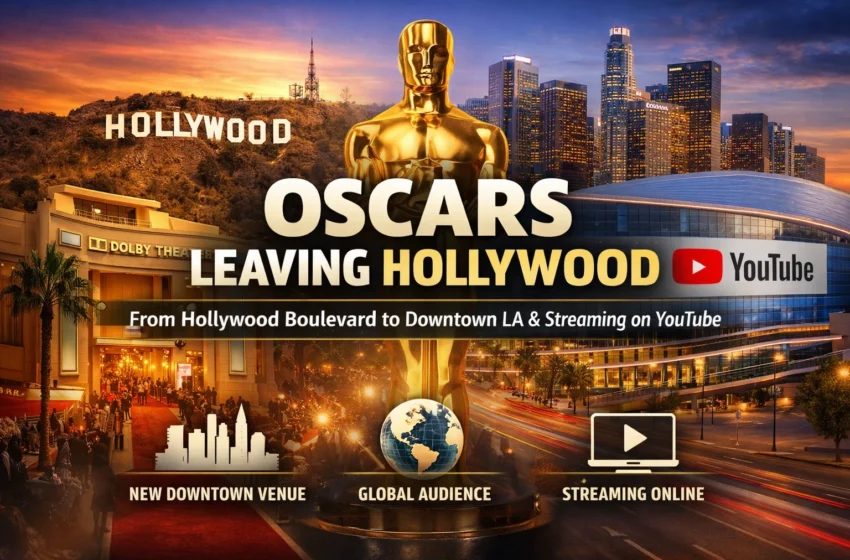
The Academy Awards, widely known as the Oscars, are set to leave their long-standing home in Hollywood, marking one of the most significant changes in the history of global cinema. Beginning in 2029, the ceremony will move from the iconic Dolby Theatre to the Peacock Theater in downtown Los Angeles. This shift is not just about location—it reflects a broader transformation in how the entertainment industry is evolving in the digital age.
🔑 Key Highlights (Quick Summary)
- The Oscars will move from Hollywood to downtown Los Angeles starting in 2029
- The 100th Academy Awards in 2028 will be the final ceremony at the Dolby Theatre
- The event will also shift from traditional TV broadcast to global streaming on YouTube
📍 Why Are the Oscars Leaving Hollywood?
The decision to move the Oscars comes after more than two decades at the Dolby Theatre, which has hosted the ceremony since 2002. While the venue has become synonymous with the awards, industry leaders are now looking toward modernization and expansion.
One of the key reasons behind this move is infrastructure. The Peacock Theater, located within the L.A. Live complex, offers a significantly larger capacity—around 7,000 seats—compared to the more limited seating at the Dolby Theatre. (AP News)
Additionally, the new venue provides a more flexible, campus-style environment. With open plazas, modern staging capabilities, and better logistical support for global broadcasting, it allows the Academy to reimagine the Oscars experience. (LAist)
This transition is also part of a long-term agreement between the Academy of Motion Picture Arts and Sciences and entertainment company AEG, ensuring the new venue will host the ceremony through at least 2039. (The Guardian)
🎬 The End of an Era: Hollywood’s Symbolic Loss
Hollywood has long been considered the heart of the global film industry, and the Dolby Theatre played a central role in that identity. For years, the red carpet along Hollywood Boulevard symbolized glamour, prestige, and cinematic excellence.
However, the shift away from Hollywood signals a changing narrative. While the Oscars will remain in Los Angeles, leaving Hollywood Boulevard represents a symbolic break from tradition.
Interestingly, this move is not entirely unprecedented. Before settling at the Dolby Theatre, the Oscars were held at venues like the Dorothy Chandler Pavilion and the Shrine Auditorium in downtown Los Angeles. (LAist)
This suggests that while Hollywood has been a major chapter, it is not the only one in the Oscars’ history.
📺 Digital Transformation: From Television to Streaming
Perhaps the most transformative aspect of this change is not the venue—but the platform.
Starting in 2029, the Oscars will transition from traditional television broadcasting on ABC to global streaming on YouTube. This move aligns with changing viewer behavior, as audiences increasingly prefer digital and on-demand content.
Recent data shows declining TV viewership for the Oscars, while online engagement and social media interactions have grown significantly. (New York Post)
By moving to YouTube, the Academy aims to:
- Reach a younger, digital-first audience
- Expand global accessibility
- Increase real-time engagement
This shift could redefine how award shows are consumed worldwide.
🌍 Broader Industry Context: Why This Move Matters
The Oscars are not just an awards ceremony—they are a reflection of the entertainment industry’s current state. This move highlights several broader trends:
1. Decline of Traditional Media
Television is no longer the dominant medium it once was. Streaming platforms, social media, and short-form content are reshaping viewer habits.
2. Rise of Digital-First Audiences
Younger audiences prefer mobile-friendly, interactive content. Platforms like YouTube offer global reach and instant accessibility.
3. Experience-Driven Events
Modern audiences expect more than just a ceremony—they want immersive experiences. The L.A. Live complex allows for a more integrated event with fan engagement, media coverage, and live interactions.
📊 Implications for Hollywood and the Film Industry
The relocation of the Oscars could have far-reaching implications:
🏙️ Impact on Hollywood
Hollywood may lose some of its cultural spotlight as the epicenter of the awards season. The move could also affect local tourism and businesses that benefit from Oscar-related events.
🎥 Industry Branding Shift
The Oscars moving downtown reflects a broader decentralization of the film industry. Streaming platforms like Netflix and global cinema markets are already challenging Hollywood’s dominance.
📡 Evolution of Award Shows
Other award ceremonies may follow suit, prioritizing digital platforms and modern venues over traditional setups.
🔮 Future Predictions: What Happens Next?
Looking ahead, this transition could reshape the future of global entertainment:
1. Fully Digital Award Shows
The Oscars could evolve into a fully interactive digital event, featuring live chats, audience voting, and multi-language streaming.
2. Global Audience Expansion
Streaming on YouTube opens the door to billions of viewers worldwide, making the Oscars more inclusive than ever.
3. Hybrid Event Experiences
Future ceremonies may blend physical and virtual experiences, allowing audiences to participate from anywhere.
4. Increased Competition
As global content rises, the Oscars may face increased competition from international awards and streaming platforms’ own recognition systems.
🧠 Why Oscars are Leaving Hollywood?
The Oscars are leaving Hollywood to modernize the event, expand global reach, and adapt to changing audience behavior. The move to a larger venue and streaming platform reflects the entertainment industry’s shift toward digital-first experiences and global accessibility.
🏁 Conclusion
The Oscars leaving Hollywood is more than a logistical change—it is a cultural turning point. As the ceremony prepares to enter its next phase in downtown Los Angeles and on global streaming platforms, it reflects the evolving nature of entertainment itself.
While nostalgia will always be tied to Hollywood Boulevard, the future of the Oscars lies in innovation, accessibility, and global engagement. This move signals that even the most iconic institutions must adapt to remain relevant in a rapidly changing world.

