
Tropical Cyclone Narelle Turns Sky Red in Australia: Science Behind the ‘Apocalyptic’ Phenomenon Explained
- Latest World
Infosprinkle
- 0
- 7 minutes read
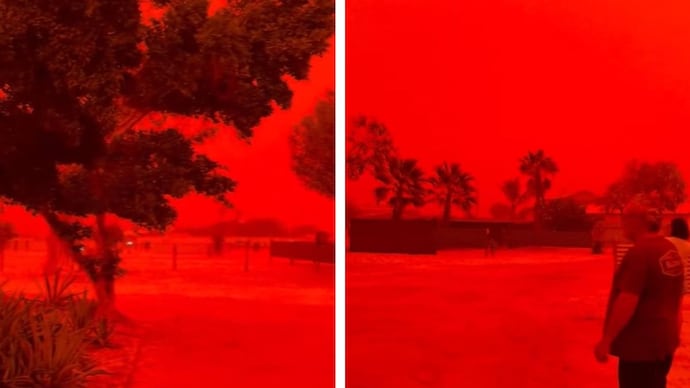
Image Credit:X
Key Takeaways
- The red sky in Western Australia was caused by iron-rich dust lifted by Cyclone Narelle winds
- The cyclone followed a rare multi-region path, impacting multiple parts of Australia
- The phenomenon highlights how extreme weather can create rare atmospheric visual effects
A dramatic and surreal natural phenomenon unfolded in Western Australia as Tropical Cyclone Narelle approached the coastline, turning the sky a deep blood-red and capturing global attention. The rare event, witnessed across regions like Shark Bay and Carnarvon, has sparked curiosity and concern, with experts now explaining the science behind the striking visuals.
Tropical Cyclone Narelle Red Sky Explained: Why Did the Sky Turn Blood Red?
As Cyclone Narelle intensified near Western Australia, powerful winds swept across the region, lifting vast amounts of iron-rich red dust from inland areas into the atmosphere. (The Guardian)
Meteorologists explained that this dust, combined with sunlight scattering, filtered out shorter blue wavelengths, allowing red tones to dominate the sky. (GKToday)
The result was an eerie crimson glow that turned daylight into what many described as an “apocalyptic” scene. Residents reported thick dust in the air, with one eyewitness saying it felt “gritty in your teeth and eyes.” (ABC News)
Experts noted that the phenomenon occurred due to a perfect combination of strong winds, dry conditions, and iron-rich soil, making it both rare and visually dramatic. (The Guardian)
Cyclone Narelle Impact Australia: Unusual Path and Severe Weather Conditions
Tropical Cyclone Narelle has been one of the most unusual storm systems in recent years. It became the first cyclone in over two decades to make landfall across three Australian regions, covering thousands of kilometres. (The Guardian)
The cyclone brought destructive winds exceeding 250 km/h, heavy rainfall, flooding, and widespread disruption across Western Australia. (News.com.au)
Several towns experienced power outages, infrastructure damage, and rising floodwaters, while emergency services were deployed to assist affected communities. (News.com.au)
Despite the damage, the red-sky phenomenon became one of the most talked-about aspects of the cyclone, with images and videos going viral worldwide.
Red Sky Weather Phenomenon History: Similar Cases in Australia and Beyond
While rare, red skies caused by dust storms have been observed before in Australia. Earlier in 2026, a similar effect was seen in Onslow due to inland thunderstorms pushing dust toward the coast. (The Guardian)
Historically, Australia’s cyclone-prone regions—especially the Pilbara and Gascoyne—are known for their iron-rich landscapes, which can create dramatic atmospheric effects under extreme weather conditions. (ABC News)
Globally, similar red or orange skies have been reported during major dust storms and wildfires, such as during bushfire seasons or Saharan dust events affecting Europe.
Cyclone Narelle itself has also made history, being one of the strongest storms of 2026 and following an unusual long-distance path across Australia. (Wikipedia)
FAQs
Q1. Is a red sky during a cyclone dangerous?
The red color itself is not dangerous, but it indicates heavy dust in the air, which can reduce visibility and affect breathing, especially for vulnerable individuals.
Q2. How rare is this red sky phenomenon?
While dust-related color changes do occur, the intensity and scale seen during Cyclone Narelle are considered rare and require a specific combination of weather and environmental factors.

